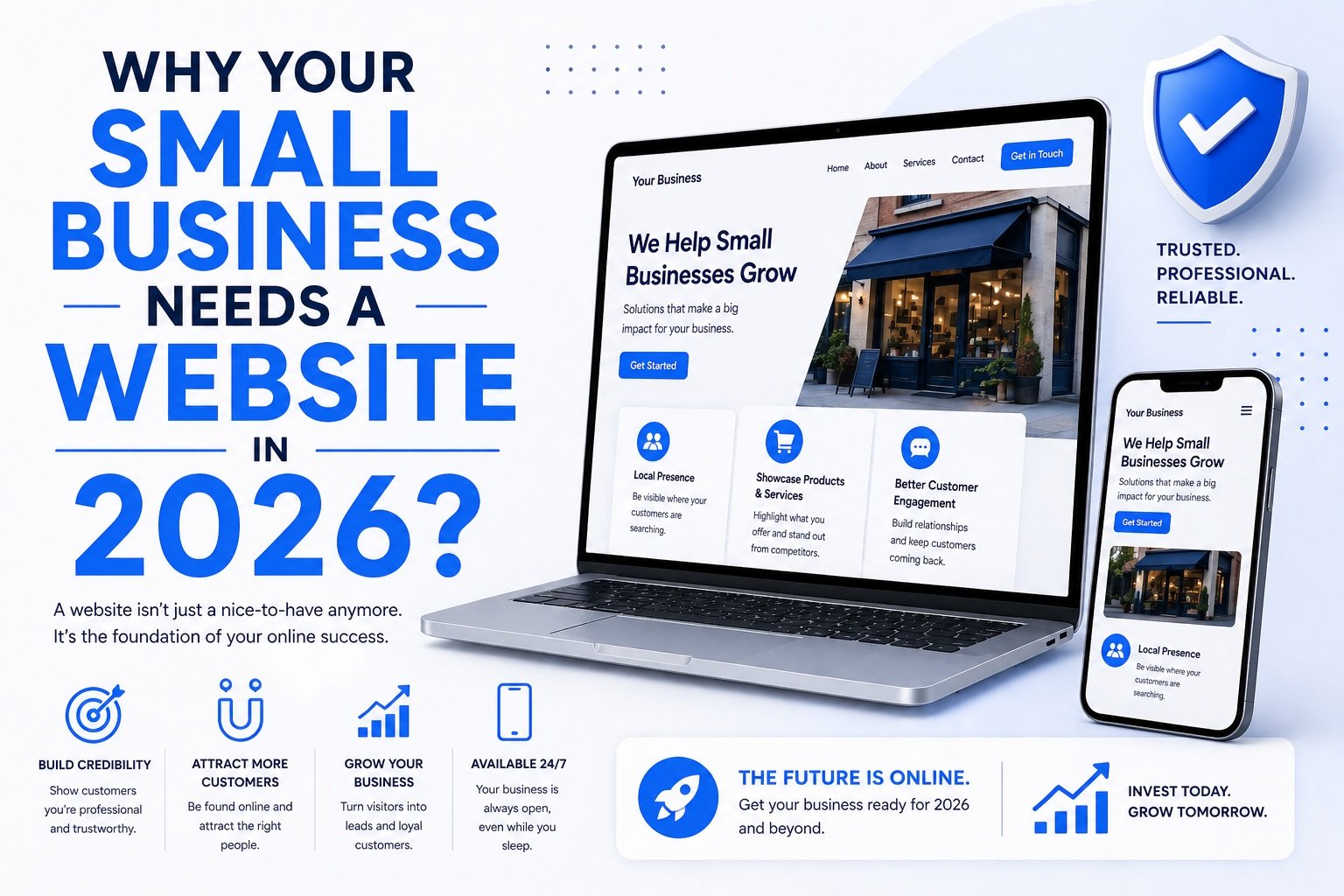
Why your small business needs a website in 2026
Around one in four UK small businesses still operates without a dedicated website in 2026. Many rely entirely on social media to manage their online presence. It feels logical. The platforms are free, easy to use and already full of potential customers.
But here is what that decision is quietly costing you. Every search that cannot find you. Every customer who checked your Instagram, saw patchy posts and moved on. Every referral who Googled your name and found nothing.
Social media is rented space. Your website is yours.
Every post you publish on Instagram, every product photo on Facebook, every review on a third party platform — all of it lives on infrastructure you do not own and cannot control. When Meta changes its algorithm, your reach can drop overnight. When a platform restricts your account, your audience disappears. When a social network falls out of favour, your presence goes with it.
A website is an owned digital asset. No algorithm removes it from search results because you did not post enough this week. No platform policy changes who can see it. No algorithm decides how many of your followers actually find it. It is yours permanently.
Research by Verisign found that 84 percent of consumers believe a business with a website is more credible than one with only a social media page. Credibility is not a nice to have. In a market where first impressions form in under 50 milliseconds, it is the difference between an enquiry and a bounce.
What your customers do before they contact you
Today the first experience a potential customer has of your business almost never happens in person. It happens on a phone screen, usually on Google, before they have decided whether to get in touch. Even warm referrals follow this pattern. Someone hears about you from a friend and the first thing they do is search your name.
What they find in that moment either confirms the referral or undermines it. A clean professional website that clearly explains what you do, who you serve and how to get in touch turns a warm lead into a booking. An Instagram profile with a mix of posts, or nothing at all, raises doubt and often ends the journey before it begins.
| What the data shows | Source |
|---|---|
| 81% of buyers research online before buying | Invoca, 2024 |
| 75% judge credibility by website design | Stanford Web Credibility Research |
| 57% will not recommend a business with a poor mobile site | Forbes, 2024 |
| 40% of Gen Z decided against a purchase because there was no website | Adobe research |
| Organic search drives 53% of all website traffic vs 5% from social media | BrightEdge data |
| 94% of first impressions are design-related | ResearchGate, 2023 |
The credibility gap between you and your competitors
Think about the moment a potential customer compares you directly with a competitor. One business has a clean professional website with services clearly explained, pricing guidance and real customer reviews. The other has only a social media page with inconsistent posting.
In that comparison, the website wins regardless of which business is actually better at their work. The website signals investment, commitment and permanence in a way that social media simply cannot replicate. You may be ten times more skilled than your competitor but if they have a professional website and you do not, they win the enquiry.
Your website works when you are not working
A social media presence demands daily attention indefinitely. You need to post consistently, respond to comments, follow trends and adapt every time an algorithm changes. The moment you stop, your visibility falls. A well built website requires none of that constant effort.
With the right setup, your website captures leads, answers common questions and drives enquiries around the clock without you doing anything. A cleaning company can offer instant quote requests. A consultant can allow online appointment scheduling. A retailer can sell products directly. Every marketing campaign you run performs better when it leads to a professional website that completes the customer journey.
Organic search accounts for 53 percent of all website traffic across industries, while social media delivers approximately 5 percent. Companies with blogs generate 67 percent more leads monthly than those without. Social media builds awareness. Your website is where the conversion happens.
The real risk of staying social-media-only
Organic reach on Facebook for business pages has been declining consistently for years. Instagram reach for unpromoted content is increasingly limited. One algorithm change in 2023 caused significant traffic loss for businesses that had built their entire presence on Meta platforms.
A website is not a replacement for social media. Both serve different purposes and the best businesses use both together. Social attracts attention and builds familiarity. Your website converts that attention into enquiries and sales. The mistake is treating social media as a substitute for a website rather than a channel that works alongside it.
The cost of waiting another month
The two barriers that stopped small businesses getting websites in previous years were cost and complexity. Both have fallen significantly. A professional small business website in 2026 costs between £1,000 and £3,000 from a freelancer. Managed WordPress hosting costs £10 to £40 per month.
Every month without a website is a month of missed Google searches, missed credibility signals and missed conversions from referrals who looked you up and found nothing. The question in 2026 is not whether your business can afford a website. It is whether you can afford to keep going without one.
Frequently asked questions
Is a Facebook page enough for a small business in 2026?
No. Around 73 percent of consumers expect businesses to have a website even if they have social media, according to Statista. A Facebook page cannot rank on Google for your services, cannot be owned by you, and cannot be controlled when the platform changes its rules.
How much does a small business website cost in 2026?
A professional small business website typically costs £1,500 to £3,000 with a freelancer or £3,000 to £6,000 with a small agency in 2026. Annual running costs including hosting, domain and maintenance sit between £500 and £2,000 per year.
How quickly can I expect results from a website?
With paid ads or local SEO, some businesses see enquiries within weeks of launch. Organic growth through search takes three to six months for most small business websites. The long-term return is significantly higher and more sustainable than paid social media.
What if my customers are all on Instagram?
Instagram is excellent for discovery and brand awareness. But when those customers want to hire you, book an appointment or buy something, they will search Google. Without a website, your Instagram presence has no landing point for conversion.
Do I need to keep updating my website?
A basic informational site can run for months without changes. For better SEO performance, adding a blog post monthly and keeping your services updated makes a real difference. A maintenance retainer from £25 per month keeps everything secure and running.
Still on the fence about getting a website for your business?
Organic search accounts for 53 percent of all website traffic across industries, while social media delivers approximately 5 percent. Companies with blogs generate 67 percent more leads monthly than those without. Social media builds awareness. Your website is where the conversion happens.